
Organization → Organism
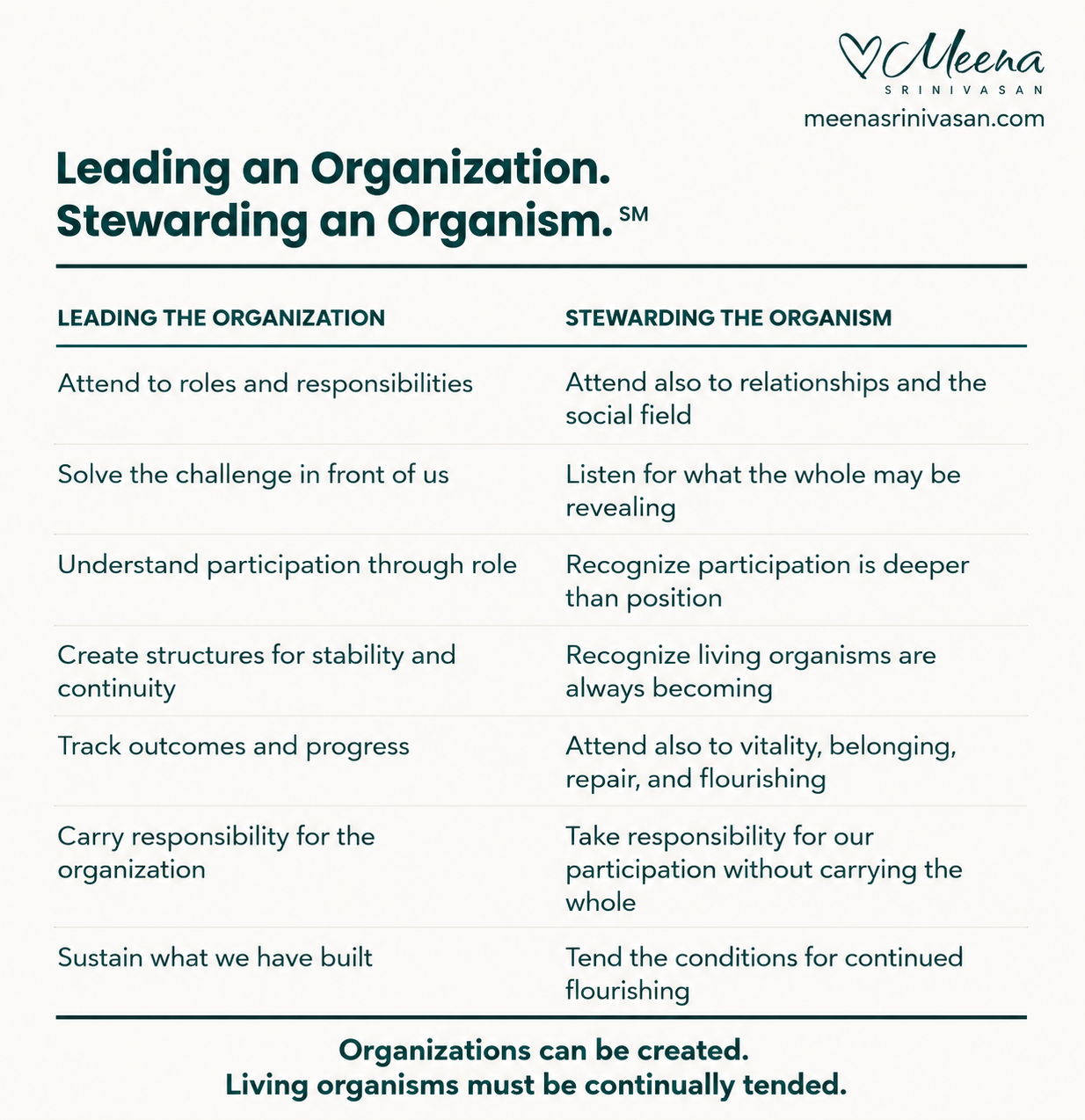
Leading an Organization. Stewarding an Organism.
Last month, our family visited the Natural History Museum in Balboa Park. As we walked through exhibits spanning billions of years of Earth's history, I found myself filled with awe. Standing before such vastness, I was reminded that each of our lives is but a brief moment in a much longer unfolding. We are invited to participate in life for a little while, tending to something sacred that began long before us and will continue long after us in other forms.
I didn't realize it then, but those few hours at the museum were quietly preparing me for one of the deepest leadership insights I've had.
Just weeks later, I was in a circle with our fifth cohort of Transformative Educational Leadership (TEL) Fellows at our Opening Retreat, followed immediately by our first-ever Alumni Convening. Eight and a half years ago, TEL existed only as a conversation. This summer, I watched alumni facilitate an entire retreat designed by alumni, for alumni. I experienced alumni and Fellows who once arrived seeking community become people creating community. I watched our teams lead with extraordinary trust, wisdom, and care. More than 212 educational leaders across five cohorts, touching the lives of more than 1.5 million children, now share common practices and a commitment to cultivating Beloved Learning Communities.
This summer, what I had long sensed became unmistakably clear.
For more than twenty years, I've heard my teacher, Thich Nhat Hanh, describe our spiritual community as an organism rather than an organization. I understood those words intellectually. Watching TEL this summer, I finally understood them in my body. Its aliveness was unmistakable.
It has changed how I understand my purpose as a leader.
I still lead an organization. I raise funds, help shape the flow of our team's work, develop strategy, and respond to the countless curveballs that come with leading a nonprofit in these challenging times. Those responsibilities matter deeply. What has changed is not what I do, but what I understand all of it to be in service of.
Increasingly, I see my deepest responsibility as stewarding the living organism the organization exists to serve.
Organizations can be created. Living organisms must be continually tended.
The organization provides structure: strategy, planning, budgets, roles, and the visible systems that allow people to work together. The organism is the life moving through that structure: trust, belonging, relationships, culture, shared purpose, joy, grief, creativity, courage, repair, and love. The organization gives form. The organism gives life. Both matter. I increasingly believe that the organization exists to support the organism.
For me, this is contemplative leadership: learning to perceive deeply enough that how we lead is informed by what is actually alive. Alongside strategic decisions, challenges, and opportunities, another question now lives within me: What is this organism asking of me in this season?
This is not theoretical for me. I've watched it play out over eight years.
In recent years, I've witnessed several organizations in the mindfulness, contemplative education, and social-emotional learning fields close their doors. TEL is still here. More importantly, TEL evolved.
Not because we found the perfect strategic plan. Not because we protected the original version of TEL at all costs. And not because change was always easy.
We evolved because we listened to the organism.
Cohort after cohort, our Fellows taught us who TEL was becoming. Our facilitators taught us. Our alumni taught us. The changing educational landscape taught us. We changed our language as our understanding deepened. We responded to what leaders were actually experiencing. And while so much of the world moved toward greater scale, speed, and automation, TEL kept investing in embodiment, relationship, practice, and the irreplaceable experience of human beings being fully present with one another.
This summer's Alumni Convening made the result visible. I watched alumni create and facilitate a gathering for one another. What began eight years ago as a Fellowship was generating new life through the community itself.
That is what an organism does. It adapts. It learns. It regenerates. It becomes.
I don't say this to suggest that organizations close because they somehow failed to listen, nor do I believe TEL's continued flourishing can be reduced to a single explanation. Organizations end for countless reasons, many beyond their control. But looking back, I can see that one of TEL's greatest strengths has been our willingness not to confuse preserving the organization with tending the life within it.
We have changed forms in order to remain faithful to what is most alive.
TEL and the Thich Nhat Hanh School of Interbeing are also teaching me about stewardship across two very different seasons. TEL is now in its eighth year, shaped by hundreds of leaders and thousands of moments of relationship, practice, learning, and care. At the same time, the School of Interbeing is preparing to welcome its very first students on August 17th.
One organism is in a season of greater maturity. Another is in a season of birth. Living organisms are always becoming. Birth asks something different than maturity. A startup can require extraordinary effort, courage, experimentation, and clear direction. Another season may call for deeper listening, trust, or a different expression of service. There is no formula. The contemplative practice is discerning what this particular organism needs now.
That insight has also illuminated my own transition from the Founding Board of the School of Interbeing into the role of Board Emeritus. I no longer hold any formal authority or governing role with the School. From one perspective, that could look like giving away formal power. I experience it differently. The organism has taught me that participation is deeper than position.
I will always be a co-founder, and now I am also a parent whose son will walk through the School's doors as part of its very first class. I remain a practitioner and community member, deeply committed to the School's flourishing. My form of service is changing, but my participation in its life continues. Leadership can be expressed through formal roles, and it can also move through presence, relationship, practice, integrity, generosity, and love.
Last week, my spiritual brother and TEL Alum, Marquin Parks, who is one of those low-key geniuses whose wisdom runs incredibly deep without ever needing to announce itself, offered me a perspective that deepened this understanding even further. He reminded me that everything we bring into a community becomes part of its life, and that the organism itself will continue responding, revealing, and becoming in ways no single person can control.
I've been sitting deeply with that wisdom. A leader participates in the organism, but does not carry the organism.
This is not an invitation to passivity. As an Executive Director, I make difficult decisions and hold real responsibilities. But I am learning to distinguish between what is mine to tend and what belongs to the life of the whole. I can listen deeply, speak truthfully, make the decisions that are mine to make, repair when needed, and participate with integrity without believing that I must control what happens next.
Perhaps this is another dimension of contemplative leadership: taking full responsibility for how we participate while releasing the illusion that any one of us can determine the life of the whole.
Every conversation, decision, relationship, rupture, repair, act of courage, and expression of care enters the social field. Nothing exists in isolation. The organism receives what we contribute and continues becoming.
This has also brought me back to Thomas Merton's rendering of the Taoist story The Woodcarver from The Way of Chuang Tzu which my mentor, Linda Lantieri, recently reminded me back in to. Before beginning his work, the master carver Khing quiets everything that might interfere with his ability to truly see. Only then does he enter the forest and encounter the trees in their natural state. Rather than imposing a predetermined form upon the wood, he becomes able to perceive the possibility already present within it.
The woodcarver still carves. He acts. He brings skill, discernment, effort, and responsibility. But he does not waste his vital energy forcing life to conform to him.
Perhaps this is what stewarding an organism asks of us too: to become perceptive enough to encounter what is actually here, discerning enough to know what is ours to do, and trusting enough not to carry what belongs to the whole.
Standing amid billions of years of Earth's history last month, I was reminded how brief our time really is. We are invited to participate in something much larger than ourselves, to tend what has been entrusted to us, help it flourish, and allow ourselves to be shaped by it along the way.
We don't have to carry the whole. We do have to tend our part with love.
Perhaps that is the leadership stance I am growing more fully into:
Leading an organization. Stewarding an organism.
With gratitude,

Tenderness as a Living Lab
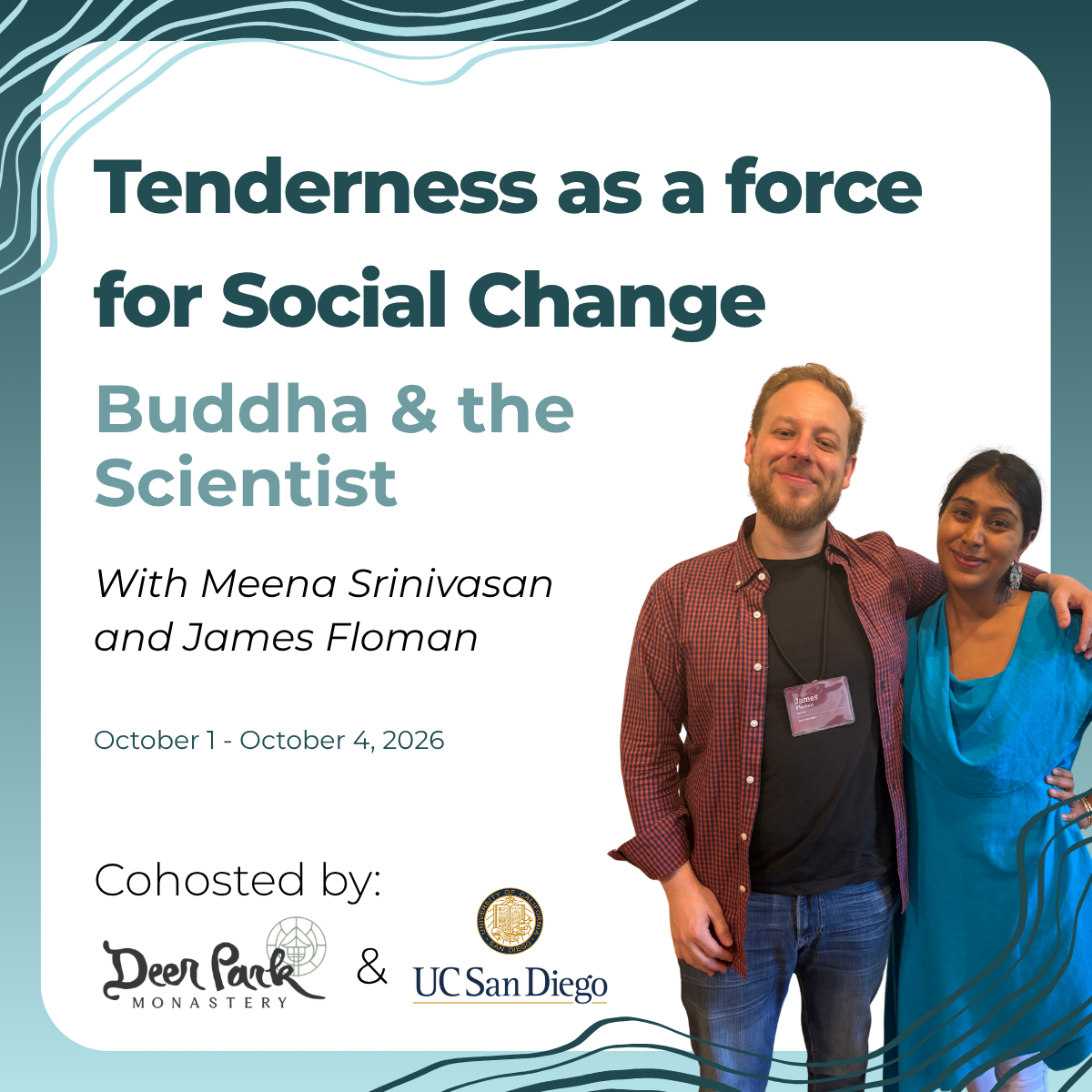
I’m so looking forward to being on retreat with fellow contemplative, and longtime research partner, emotion scientist Dr. James Floman of the Yale Center for Emotional Intelligence, and presenting together at Buddha and the Scientist, a unique gathering co-hosted by Deer Park Monastery and UC San Diego. We’ve conducted several studies, developed an empirically validated conceptual model of tenderness, and this research continues to feel incredibly inspiring!
A Community Becoming
If this month's reflection resonates with you, I'd love to invite you to watch this short video from TEL's inaugural Alumni Convening. Beautifully created by our Advisory Board Chair, Hector Montenegro, it offers a glimpse of what becomes possible when a community is nurtured over time—when relationships deepen, leadership is shared, and an organization begins to flourish as a living organism. My deepest gratitude to our Alumni Steering Committee—Paula Lightsey, Lea Abrams, Alan Van Gardner, Dr. Shannon Wanless, Caroline Han, Annie Paraison, and Renny Fong—for envisioning and bringing this inaugural gathering to life. Created by alumni, for alumni, it reflected the wisdom, generosity, and shared stewardship that continue to shape TEL's evolving community.


Meena's Newsletter
Offerings & insights from my heart to yours - delivered straight to your inbox.
Sign Up

